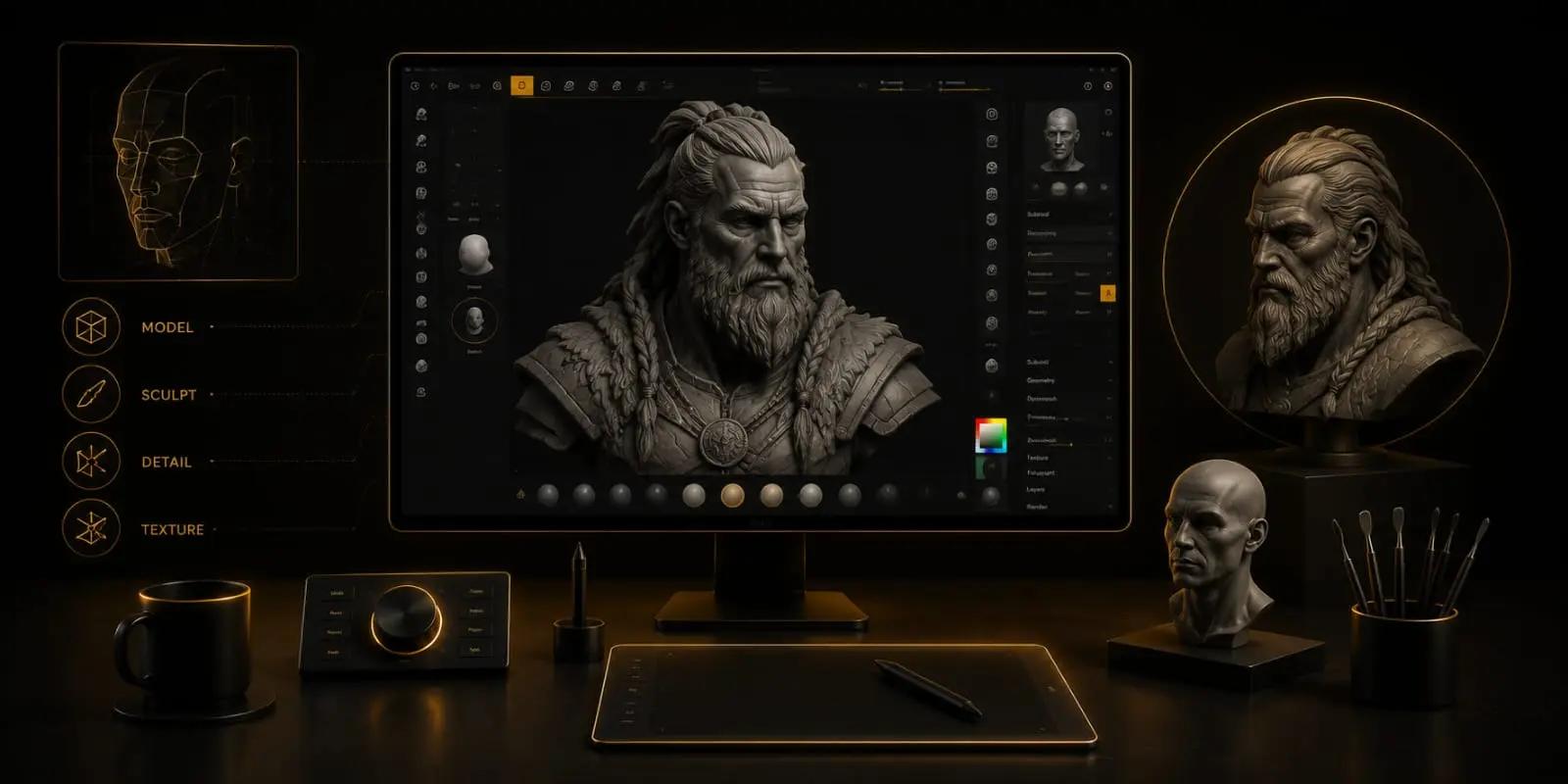
Character Creation & Digital Sculping Program
Character Creation & Digital Sculpting Professional Program in Noida
A character should tell you something before it speaks. The shape of the body, the face, clothing, proportions, posture, and even small surface details can suggest age, personality, role, or mood. Digital sculpting gives artists a way to develop those ideas in three dimensions.
This programme at OREAL World focuses on the transformation from an early character idea to a developed 3D form. The work begins with structure. Students explore anatomy, proportions, shapes, and the forms that make a character believable. Digital sculpting then allows those broad forms to become more refined, with facial features, expressions, clothing, accessories, and other details adding identity.
But character creation is not simply about making a detailed model. Every design decision needs to support the character. A costume can suggest a role. A change in proportion can alter the personality. A face can make the same character feel young, serious, friendly, or threatening.
Through practical character-building work, students learn to make those choices visible in the final model. Their portfolio can then show more than technical software use; it can show character design, digital sculpting, 3D modelling, and visual development.
This foundation can lead to roles such as Character Artist, Digital Sculptor, 3D Artist, or Game Character Artist across games, animation, film, and digital media.
What You'll Learn in Character Creation & Digital Sculpting
Software Covered
Character Design & Development
Digital Sculpting
Production Workflow
Your FutureStarts Here
Character Artist
Creature Artist
Digital Sculptor
Real Projects.Real Portfolio.
Frequently AskedQuestions
Everything you need to know before starting the Character Creation & Digital Sculping Program program.
Believability comes from more than realistic detail. Proportion, anatomy, silhouette, facial structure, posture, clothing, and surface details need to work together to make the character feel intentional and convincing.
You do not need advanced anatomy knowledge before starting. Learning how the body is structured becomes part of developing character work, particularly when creating believable faces, bodies, poses, and proportions.
Traditional modelling often involves building and controlling geometry in a structured way, while digital sculpting allows artists to shape forms more freely, much like working with digital clay. Both approaches can contribute to character creation.
Yes. Silhouette, proportions, facial features, clothing, accessories, posture, and other visual choices can suggest personality, background, age, occupation, or role before the character ever speaks.
A portfolio can include character concepts developed into 3D forms, sculpted heads, full-body characters, facial studies, clothing and accessory work, and finished character presentations. Showing development alongside final work can also demonstrate the artist's decision-making.