Level Design Program
LEVEL DESIGN PROFESSIONAL PROGRAM
A player enters a new area. There are two paths ahead. One is wide and bright. The other is narrow, with only a small light at the end. Nothing on screen says which path to take. Still, the player makes a choice.
That choice is level design. A level is not just a place where a game happens. Its layout can control movement, create tension, offer rewards, hide information, or invite exploration. A small change in space can change the way a player behaves.
The work starts with spatial design and flow. Where does the player enter? What should be seen first? Where should a challenge appear? When should the player get a safe space to explore?
From there, the level begins to take shape. Routes, encounters, objectives, and environmental details work together. Single-player levels need to control one player's journey. Multiplayer maps have another challenge: several players need spaces that remain fair, readable, and interesting at the same time.
The environment can also tell a story. A damaged building, an empty desk, or a hidden passage can give information without a single line of dialogue. This is where environmental storytelling becomes part of level design.
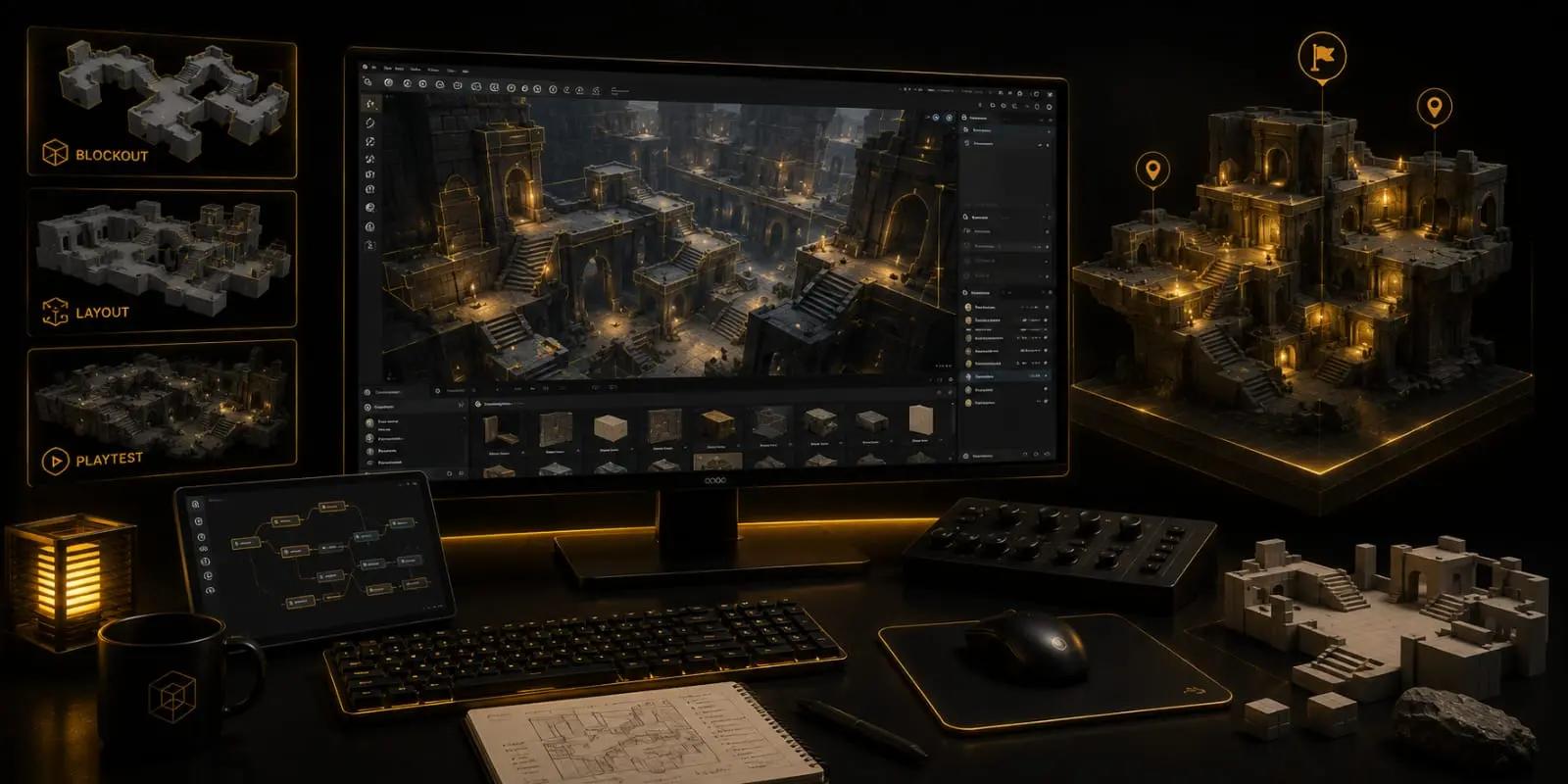
But a level that looks good on paper may not play well. Playtesting reveals where players get lost, where a challenge feels too hard, or where an area fails to hold attention. Refinement follows each test.
Using tools such as Unity, Unreal Engine, and Miro, the programme turns these ideas into playable level work. Projects can build towards single-player and multiplayer levels that demonstrate skills in navigation, encounter design, world-building, and player guidance.
The result is a portfolio that shows more than attractive environments. It shows an understanding of how spaces influence player behaviour—the foundation for roles such as Level Designer, Environment Designer, Encounter Designer, or Gameplay Designer.
WHAT YOU’LL LEARN IN LEVEL DESIGN COURSE
Level Design Fundamentals
Environment Planning & Player Navigation
Multiplayer Level Design
Testing & Level Refinement
Career OpportunitiesAfter the Program
Level Designer
Environment Designer
Encounter Designer
Build a ProfessionalLevel Design Portfolio
Frequently AskedQuestions
Everything you need to know before starting the Level Design Program program.
Game design deals with the wider rules, mechanics, and systems of a game. Level design focuses more closely on the spaces where players use those systems, including routes, encounters, objectives, challenges, and exploration.
They use layout, visibility, lighting, landmarks, paths, obstacles, rewards, and environmental cues to influence where players look and move.
The programme introduces both types of level design, helping students understand how designing a space for one player's journey differs from creating a fair and engaging multiplayer map.
A level can look clear to its creator but confuse someone playing it for the first time. Testing helps identify problems with navigation, difficulty, pacing, encounters, and player flow.
The programme uses Unity, Unreal Engine, and Miro for planning, building, and developing level concepts and playable environments.