What Is VFX? Meaning, Techniques, Process & Careers
Learn what VFX means, explore visual effects techniques, software and production workflows, and discover VFX career options and learning paths after Class 12.
Visual effects, or VFX, are used to generate, alter, or mix virtual components that are challenging to photograph. In contemporary cinema and digital production, visual effects are crucial. It consists of computerized environments and CGI animals, object removal, green screen replacement, and cinematic effects.
This tutorial describes what visual effects (VFX) are, how the VFX process operates, typical techniques, tools, talent, and how to begin learning VFX after Class 12.
What Is VFX?
Visual effects are the process of creating, altering, or combining images that are essentially “created” to be removed from a live-action film.
VFX can be used to:
Create digital characters and environments
Replace or extend backgrounds
Remove unwanted objects
Add CGI elements to live-action footage
Create fire, smoke, water, and destruction effects
Combine multiple visual elements into one realistic scene
No doubt, traditionally, VFX was associated with post-production. But now, virtual production technologies allow filmmakers to create some digital elements during filming.
Why Is VFX Used in Film Production?
To avoid danger or spending too much, filmmakers use VFX techniques to make scenes that are expensive to shoot.
Typical uses are
Creating fictional worlds: a world set in the future, a digital environment, and monsters.
Improving live-action shots can include improving scenes, modifying backgrounds, or eliminating objects.
Creating complex effects like smoke, fire, explosions, destruction, and other simulations.
Adding scale to the production: a digital environment, building, crowd, and landscape can make a production appear much bigger.
As a result, VFX is used for both subtle alterations that viewers could miss and dramatic sequences.
VFX vs CGI vs Animation vs SFX
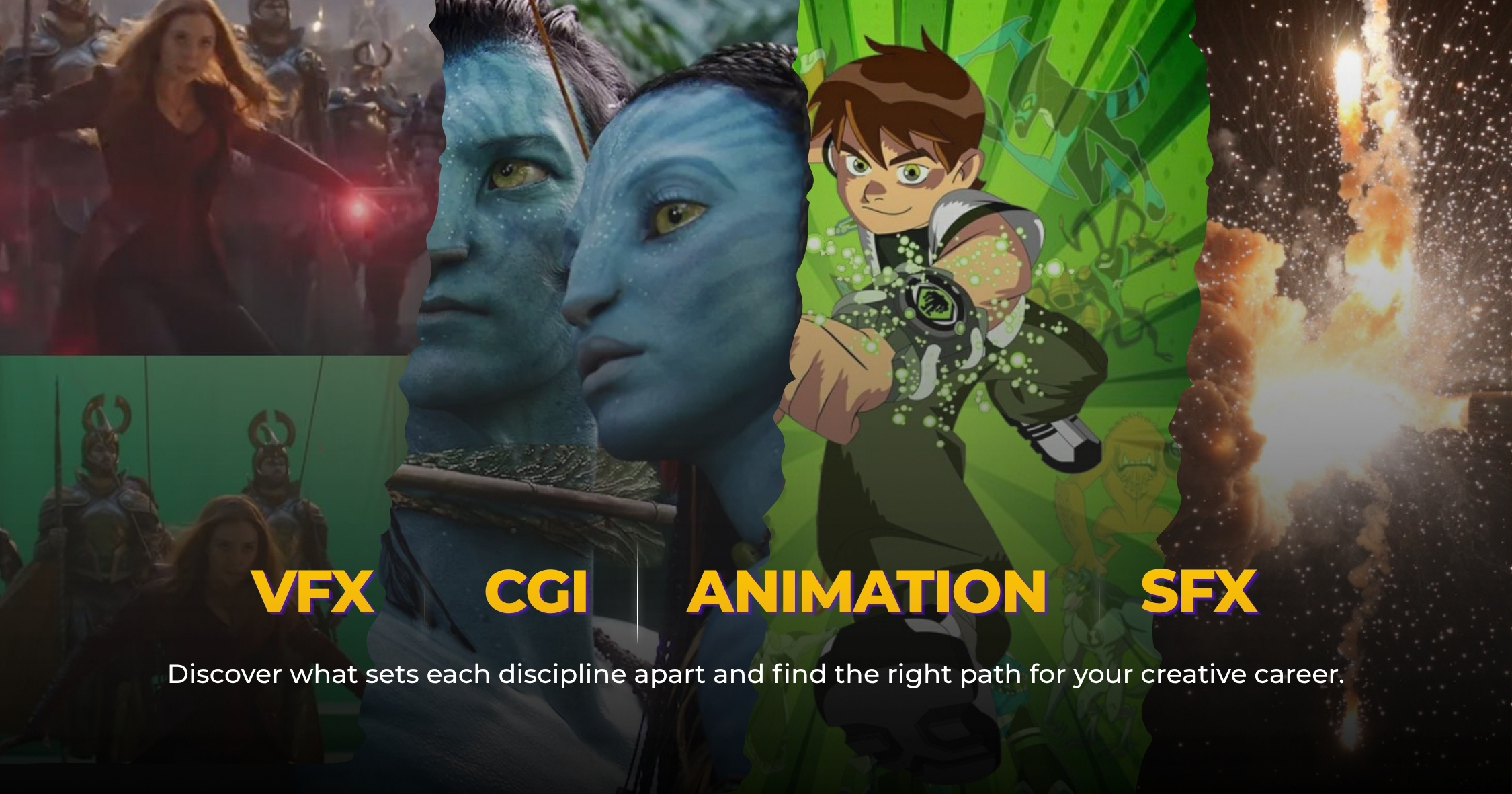
Although these terms are related but have different meanings.
Term | Meaning | Example |
VFX | Creating, modifying, or combining visual elements | Adding a CGI creature to live footage |
CGI | Computer-generated imagery | A digital creature or environment |
Animation | Creating movement and performance | Animating a digital character |
SFX | Physical effects created during filming | Practical smoke or explosion |
VFX is the broader process, while CGI and animation can be individual parts of a VFX production.
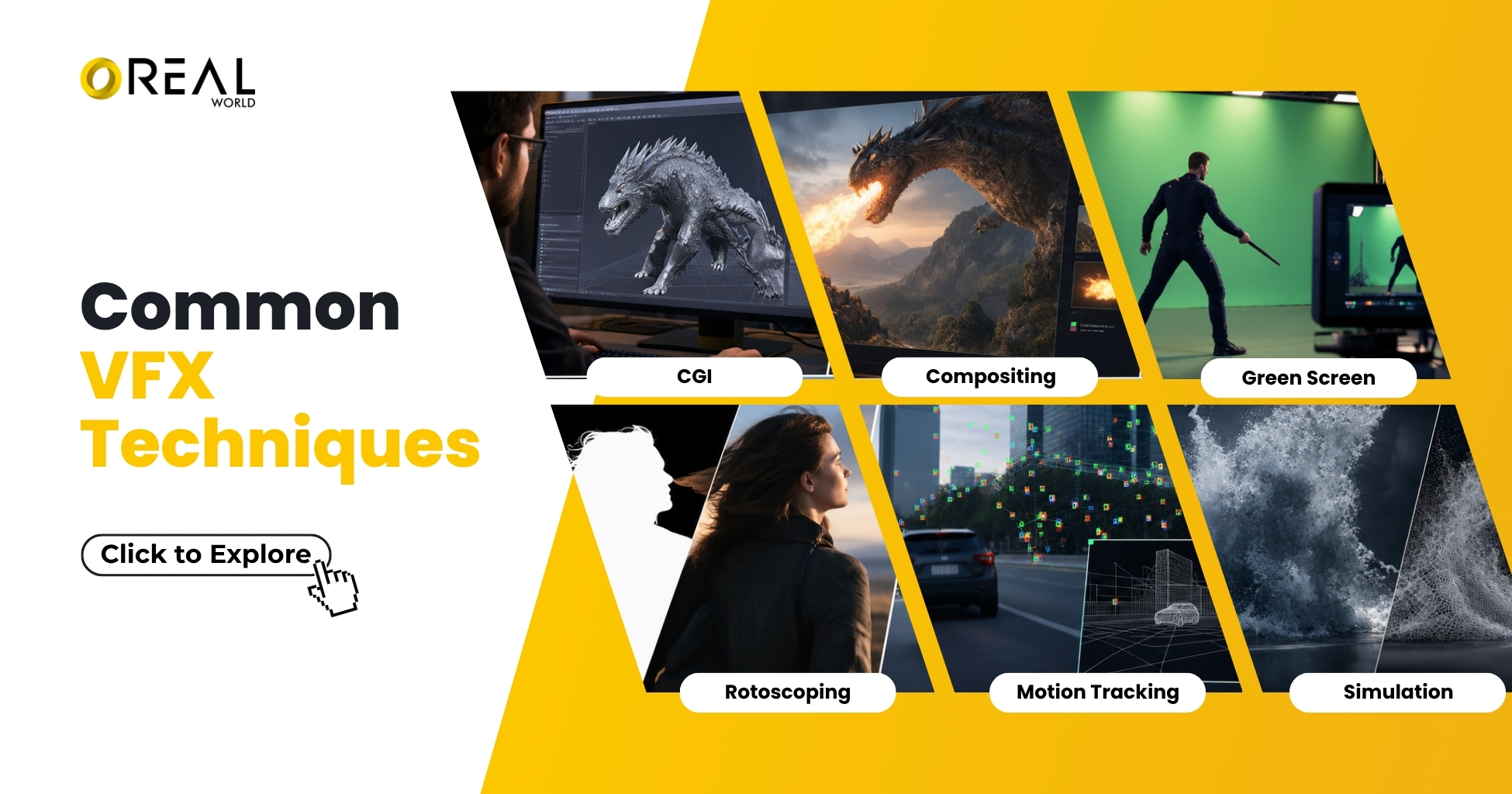
Common VFX Techniques
CGI
Computer-Generated Imagery (CGI) is the process of making images by a computer.
Compositing
Compositing technique is the process of combining elements, like live action and CGI elements, of a shot in post-production. It includes special effects and other components of a shot. Compositing is a blend of art and technology. Some of the elements of a shot may not be finished while compositing, and the artists have to add some parts of the shot using their creativity and experience. The end result should look as realistic as possible.
Green Screen
A green screen or chroma key technology allows the artist to separate an object from its background and substitute the background virtually.
Rotoscoping
Rotoscoping is a technique used to create masks around the people so that specific parts of a shot can be isolated or modified.
Motion Tracking
Motion tracking examines the movement of an object or camera so that digital components can follow it precisely.
Simulations
Digital simulations can create effects such as:
Fire
Smoke
Water
Dust
Destruction
Particles
How Does the VFX Process Work?
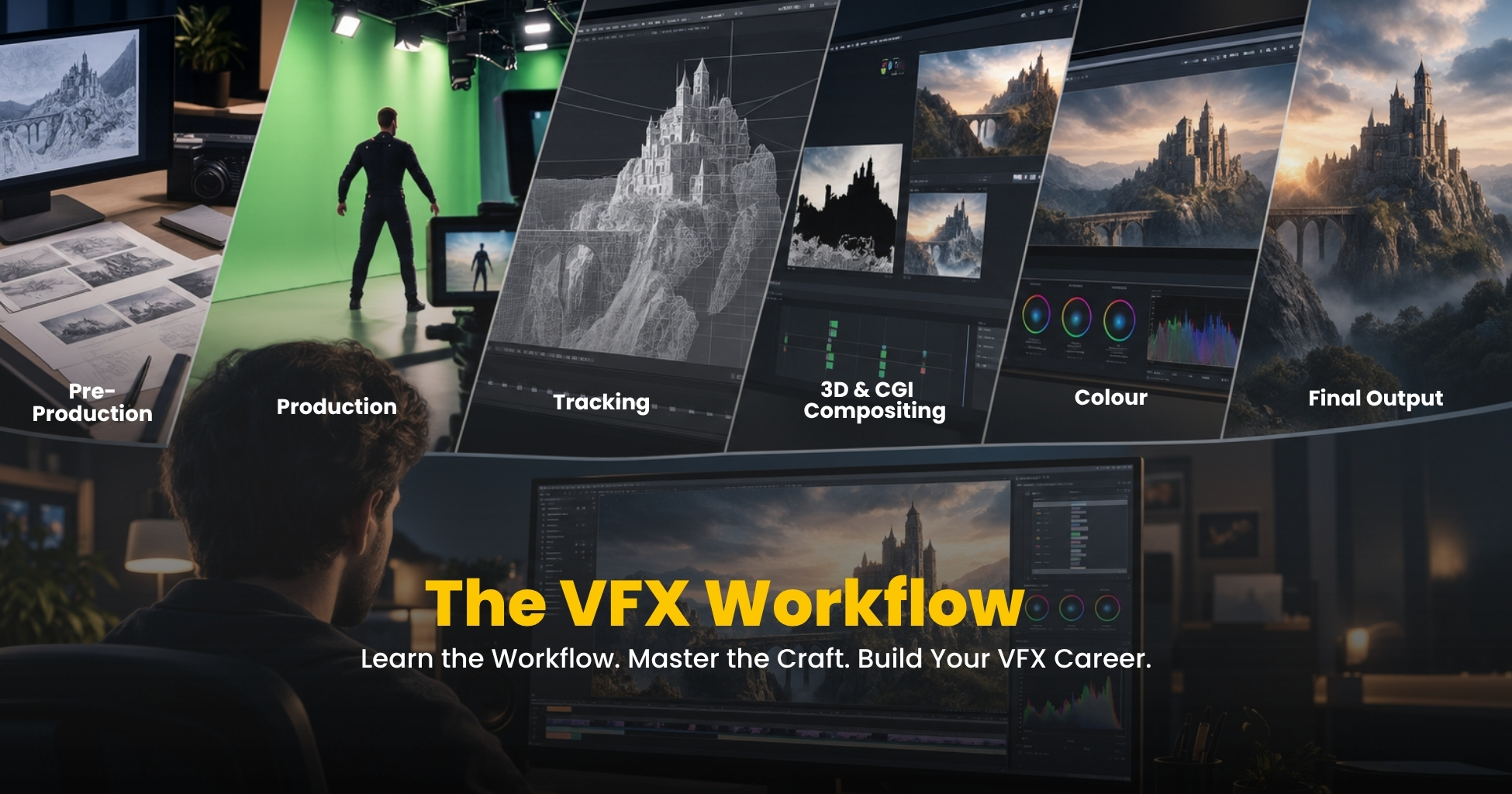
A standard set of the VFX workflow consists of multiple steps:
Planning – define what will be required in the shot for the VFX team
Filming – record footage and shoot the necessary production assets
Asset creation – make the assets that will be used for the shot
Tracking and rotoscoping – prepare the footage and track the shots
Animation and effects – animate the required assets and simulate the needed effects
Compositing – assemble the final image or video for the composite shot
Rendering and review – render the final result and make the necessary updates
Depending on the project and the type of composite shots, the VFX pipeline can vary.
Where Is VFX Used?
VFX is used across several creative industries.
Film and OTT
Different film and OTT projects use VFX for characters, environments, action sequences, set extensions, and cleanup.
Television
Television productions use VFX for environments, effects, fantasy sequences, and visual enhancements.
Gaming
Game creation employs a combination of digital people, backgrounds, effects, and cinematic displays.
Advertising
Brand advertising and promotion make use of VFX and CGI to create products, commercials, digital environments, and other displays.
Music Videos and Digital Content
VFX is also widely used in music videos, branded content, and online video production.
What Is Virtual Production?
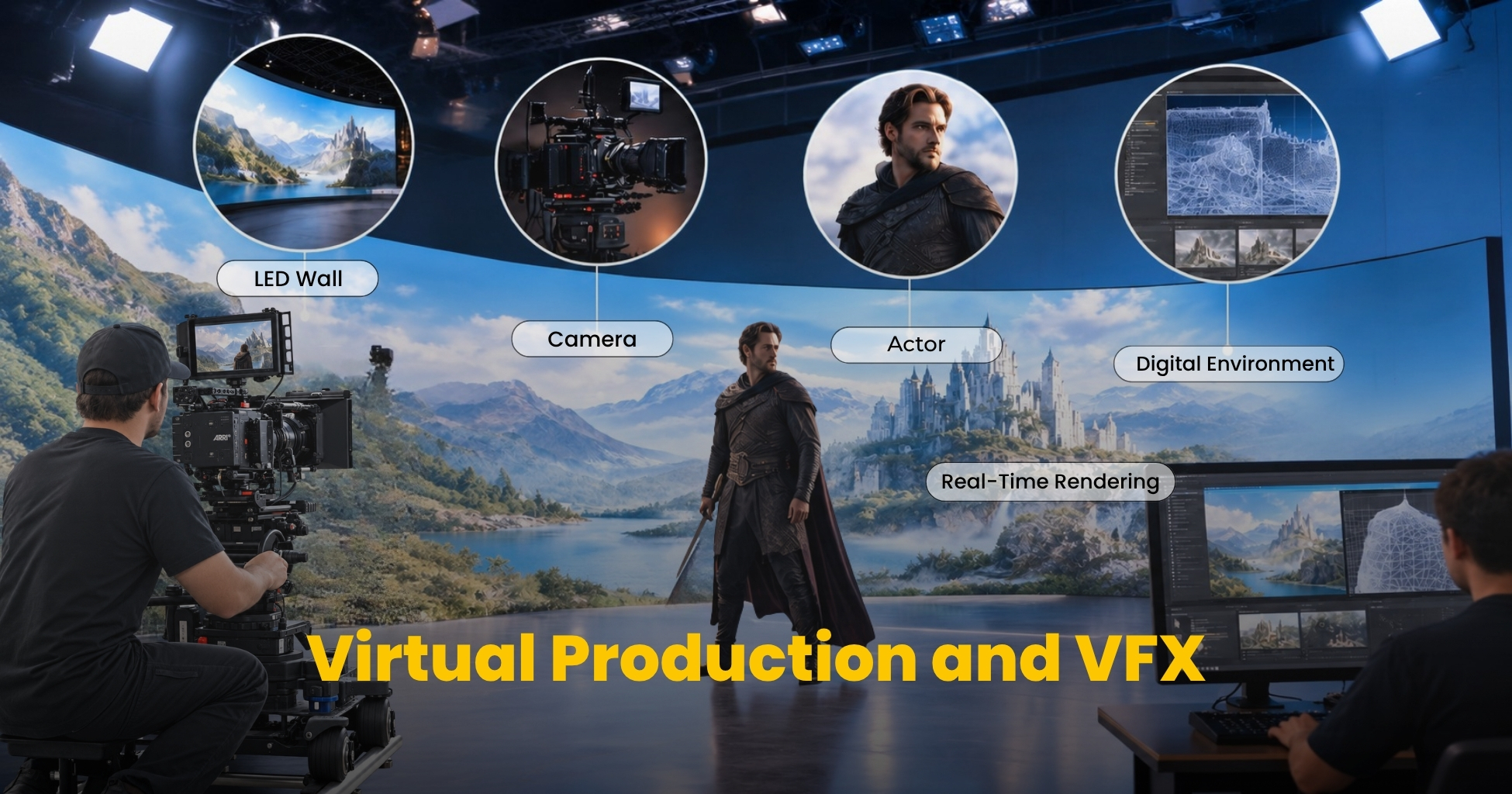
Virtual production is the conjunction of traditional physical filmmaking with digital elements and time-saving technologies.
Tools like LED volumes, camera tracking systems, or real-time engines enable filmmakers to experience a digital environment while filming.
A real-time engine such as Unreal Engine allows the updating of virtual environments based on a camera’s position, helping filmmakers make creative choices while shooting.
VFX Specialisations
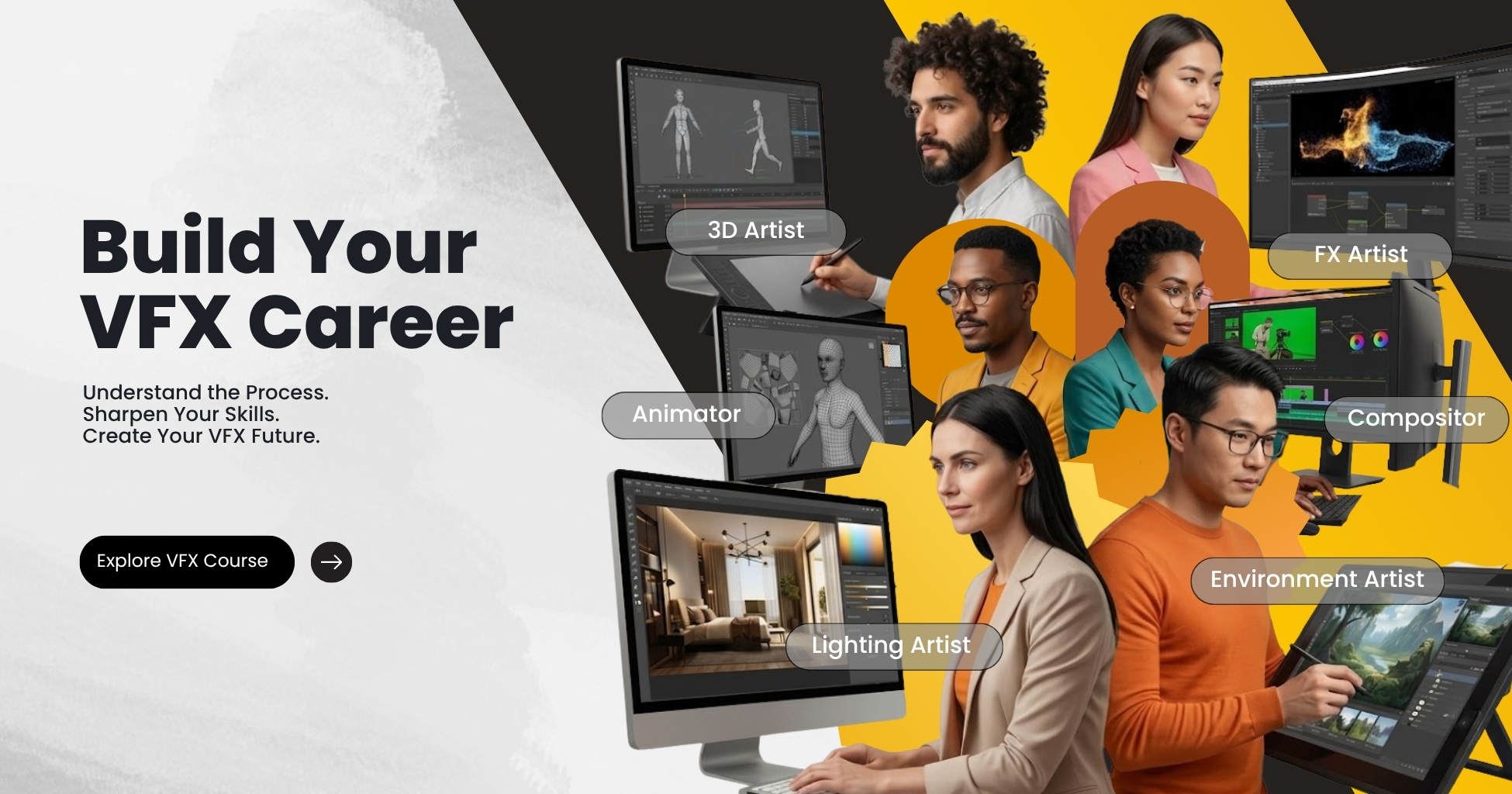
VFX production involves multiple specialised roles.
Area | Main Focus |
3D Modelling | Creating digital objects and environments |
Character Art | Creating digital characters |
Animation | Creating movement and performance |
Compositing | Combining visual elements |
FX & Simulation | Creating fire, smoke, destruction, etc. |
Environment Art | Building digital environments |
Lighting | Creating realistic lighting for digital elements |
Try to experiment with different fields before specialising.
Skills You Need to Learn in VFX
VFX combines creative and technical skills.
Important skills include:
Composition and visual storytelling
Lighting and colour understanding
3D modelling and animation
Compositing and tracking
Problem-solving
Attention to detail
Teamwork and communication
Don’t worry about being an expert in all skills. Start with the area that interests you and develop your skills through regular practice.
Which Software Is Used in VFX?
Different VFX roles use different software.
Area | Common Software |
3D Modelling & Animation | Maya, Blender |
Compositing | Nuke, Adobe After Effects |
FX & Simulation | Houdini |
Texturing | Substance 3D Painter |
Real-Time Production | Unreal Engine |
You are not supposed to learn all the tools. Just pay attention to the relevant skills.
How Can You Start Learning VFX After 12th?
If you are also interested in VFX after 12th, start with the basics and gradually move to the specialities.
1. Learn the Basics
Build an understanding of concepts like compositing, layers, masking, tracking, lighting, and visual effects.
2. Explore Different Specialisations
Before deciding, try different software like 3D compositing, animation, or VFX to identify what you enjoy doing.
3. Learn Relevant Software
Choose software based on your selected specialisation instead of trying to learn everything at once.
4. Work on Small Projects
Practise with projects such as:
Green-screen replacement
Object removal
Screen replacement
Motion tracking
Basic CGI integration
5. Build a Portfolio
Show your most effective projects and project examples in your portfolio. The best way to illustrate your skills is to use before and after examples. A strong portfolio is a realistic example of your design skills and your ability to understand and communicate an idea. LED stages, camera tracking, and real-time engines are creating new ways to combine physical and digital filmmaking. Such
changes are also opening up new avenues for people who combine creativity with technological expertise.
Learning VFX for the AVGC-XR Industry
VFX elements are essential for the AVGC-XR ecosystem as well as other creative industries, such as animation, visual effects, computer graphics, and comics.
The company offers students the opportunity to obtain the necessary skills in the field of VFX, including cinematic compositing, through the educational programs provided.
The Future of VFX
The introduction of such new technologies as AI-assisted workflow, real-time rendering, and virtual production has changed the VFX industry
AI-Assisted Workflows
Repetitive tasks and creative production processes are supported by AI, but the final creative and technical are made by the artists.
Real-Time Rendering
Real-time technologies allow artists and filmmakers to interact with digital environments more quickly during production.
Virtual Production
New technology like LED stages, real-time tracking, and special effects engines give filmmakers more ways to blend the digital and the physical in film and television production.
Industries that fuse technological and artistic skills are becoming more abundant as a result.
Common Misconceptions About VFX
VFX Is Only Used in Big Movies
Along with movies and OTT, VFX is also used in TV, gaming, advertising, and music videos.
Every VFX Artist Does the Same Work
VFX includes different types of work. Different artists perform different tasks in the same pipeline.
You Need to Learn Every Software
No. ! All you need is to become an adept user of the software used in the specific field you are in.
You Must Be an Expert Before Starting
We’ll begin by covering the essentials and build up from there.
FAQs about VFX
What does VFX stand for?
VFX means Visual Effects. It is the creation, manipulation, and combination of visual elements to come up with the final shot.
Is VFX the same as CGI?
Not really. CGI stands for Computer-Generated Imagery, whereas VFX is the process of creating, manipulating, and combining visual elements. CGI can be a component of a VFX shot.
Is VFX difficult to learn?
Learning VFX is a combination of creativity and technology. Learning is done step by step and gradually.
Can I learn VFX without knowing how to draw?
Absolutely not. Although drawing is necessary for some specialties where concepts and characters are concerned, there are many specialties within VFX that require technical expertise, like compositing, tracking, 3D, lighting, etc.
How long do you think it takes to learn VFX?
This varies from person to person. In my opinion, learning the concepts is the easy part, and the hard part is developing your skills through lessons and projects.
What software do you think is useful for VFX?
Common software includes Maya, Blender, Nuke, Adobe After Effects, Houdini, Substance 3D Painter, and Unreal Engine.
Is VFX a good career option?
VFX provides various careers in films, streaming videos, video games, advertisements, virtual production, and other forms of digital media. Different specialisations are required based on one’s interests and capabilities.
Final Takeaway
Combining creativity, technology, and visuals, VFX is used for the creation and improvement of digital shots.
If you want to get a job in VFX, you have to begin with the basics, learn specialisations, use appropriate software, work on projects, and make an excellent portfolio.
Due to the rise of CGI, AI, real-time rendering, and virtual production, VFX maintains connections with many spheres of the creative industry.